TMJ Nerve Damage Symptoms: Signs, Causes and Treatment
Home
TMJ Nerve Damage Symptoms: Signs, Causes and Treatment

Home
TMJ Nerve Damage Symptoms: Signs, Causes and Treatment
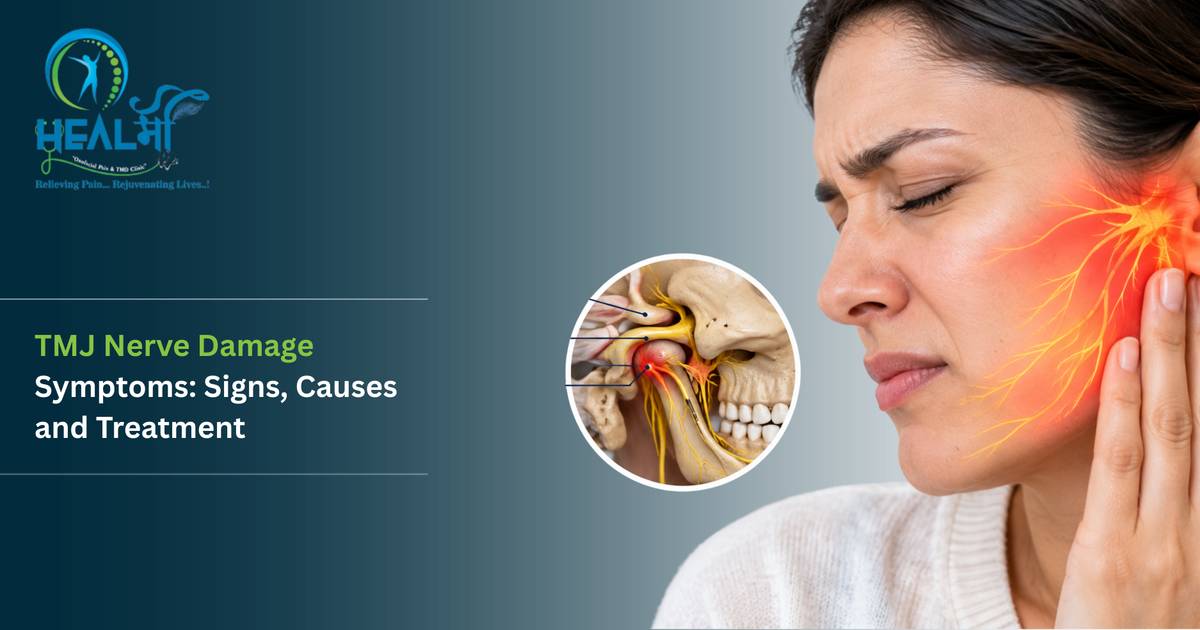
Jaw pain, facial pain, numbness, and headaches, any of these can point to a TMJ problem, but they can just as easily point somewhere else, which makes things confusing fast. The temporomandibular joint connects your jaw to your skull, it's what lets you speak, chew, and open your mouth. When the joint or the muscles around it get irritated, the pain doesn't always stay put, it can spread. If jaw or facial pain's been getting in the way of your day, getting an actual diagnosis matters before jumping into treatment. Looking for TMJ treatment in Ahmedabad ? A proper evaluation is what finds the real source, not guesswork.
TMJ trouble isn't just pain in the jaw. Some people feel it around the ear, across the face, near the temples, and even down the neck. Common ones:
Numbness, tingling, and a burning feeling; don't assume these are automatically TMJ. They can come from somewhere else entirely, so anything persistent or unusual needs a proper look by a professional.
Muscles, ligaments, and other tissues are all wrapped around the TMJ and involved in how the jaw moves. Irritate or inflame that area, and the pain doesn't stay confined to the joint, it travels.
What's usually behind it: jaw injury, clenching or grinding teeth, arthritis, muscle tension, certain joint issues. Stress plays a role too, often through clenching habits that build up strain over time. A lot of the time, though, there's no single obvious trigger.
Which is exactly why guessing the cause from symptoms alone doesn't work well. A proper exam is what tells a TMJ problem apart from something dental, muscular, nerve-related, or otherwise.
Jaw pain that sticks around or keeps getting worse is worth taking seriously, especially once it starts messing with eating, talking, sleeping, or the basic act of moving your jaw.
A few signs that it's time for an evaluation:
One separate thing worth mentioning, if facial numbness shows up suddenly, out of nowhere, don't assume it's TMJ. That needs a prompt check, since ruling out other causes matters a lot here.
No single test covers every kind of TMD. A doctor typically goes through your symptoms, medical history and how your jaw moves and examines the face, jaw and neck area. Depending on what turns up, imaging like an X-ray, CT scan or MRI might come next.
What actually matters here: where the pain starts, when it shows up, what makes it worse, how it's affecting your day-to-day. That's what keeps treatment from just chasing the symptom without understanding what's actually wrong.
It depends on the cause and severity. Many TMD cases get managed without surgery at all.
| Treatment approach | How it may help |
|---|---|
| Self-care | Takes strain off the jaw |
| Soft foods | Gives tired jaw muscles a break |
| Heat or cold | Can ease discomfort |
| Jaw exercises | Helps with movement and function |
| Physical therapy | Improves jaw movement and muscle function |
| Medication | Used to manage pain when it fits |
| Oral appliances | Helps some patients, especially with clenching |
| Arthrocentesis or arthroscopy | Considered for certain joint problems |
Most of the time, doctors start conservative when that's an option. More invasive procedures only come up once simpler approaches haven't given enough relief, or when a specific joint issue actually calls for it.
Living with jaw or facial pain that keeps coming back can throw off eating, sleep, focus, work, all of it. You don't need to just live with it, and not every facial sensation is TMJ either.
At HealMe Pain Clinic , patients get an evaluation focused on actually finding what's causing the pain, not just treating whatever shows up first. Looking for TMJ treatment in Ahmedabad? Call 87806 77703 to talk through your concerns and find out what comes next.
Treatment should follow your symptoms, your exam, your specific situation, not some generic plan applied to everyone.
Jaw pain, facial pain, stiffness, painful clicking, trouble chewing, headaches, and limited jaw movement, these are the usual ones.
Don't assume numbness is automatically TMJ. If it's persistent or unexplained, it needs a professional look to find the actual cause.
Yes, especially when the jaw muscles and surrounding structures are involved.
Sometimes. Some symptoms ease up on their own, but persistent or severe ones usually need proper treatment.
Someone experienced in assessing jaw and facial pain specifically. TMJ treatment in Ahmedabad should be picked based on what's actually causing it, not just the symptoms alone.