TMJ (Temporomandibular Joint) Disorders Symptoms and Causes – What Patients Should Know
Home
TMJ (Temporomandibular Joint) Disorders Symptoms and Causes – What Patients Should Know

Home
TMJ (Temporomandibular Joint) Disorders Symptoms and Causes – What Patients Should Know
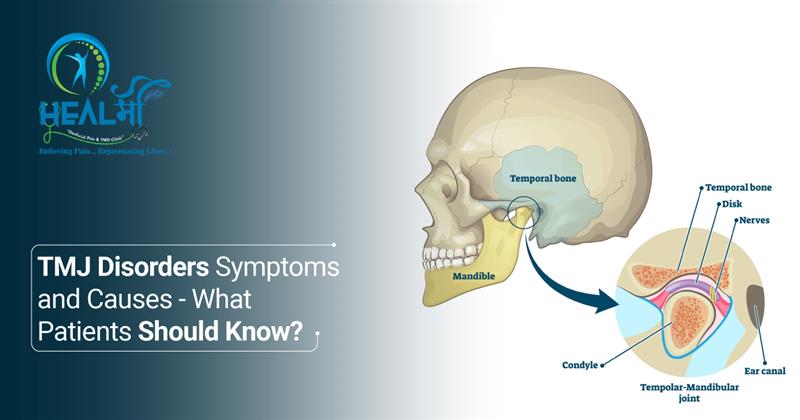
If you’ve been experiencing jaw pain, clicking when you open your mouth, headaches, or facial pain, it's very possible that your TMJ (Temporomandibular Joint) is to blame. These jaw joints, which chew and speak all day long, not to mention yawn and express emotions, are expected to do so in peace; when something goes wrong with them, daily life becomes challenging.
In recent years, a large number of patients have begun searching for help from a TMJ (Temporomandibular Joint) Doctor in Ahmedabad, India, since information about jaw joint problems has expanded. But most people don’t even today recognise the early symptoms, leading to chronic pain.
In this blog, we will trace TMJ (Temporomandibular Joint) disorders' symptoms and causes, risk factors, as well as what every patient should know before entrusting the care of a TMJ (Temporomandibular Joint) specialist.
TMJ (Temporomandibular Joint) disorders are a category of conditions that affect the jaw joint (temporomandibular joint), facial muscles, and related structures. This joint is the one that connects your jawbone to your skull, and it’s what allows you a smooth transition when you talk or chew.
When the muscles in this area become inflamed, misaligned or strained, it causes pain and difficulty opening one’s mouth, also referred to as TMJ (Temporomandibular Joint).
TMJ (Temporomandibular Joint) Problems can affect anyone, but are most common in young adults, women with higher stress levels and people who have previously sustained injury to their jaw.
The symptoms may be mild to severe. Because so many of its symptoms are similar to those of sinus issues, ear infections or migraines, people frequently misdiagnose themselves.
The following are the most typical symptoms of TMJ (Temporomandibular Joint) disorders that patients should notice :
The first warning sign is an ongoing, ever-present dull ache in the joint near the jaw, often worst in the morning and immediately after chewing.
There may be clicking and popping in the jaw when opening and closing your mouth. Sometimes it’s not painful, but still suggests joint dysfunction.
Some patients say their jaw feels like it is “locking up” or will not open wide. In more serious instances, the jaw may temporarily lock.
TMJ (Temporomandibular Joint) lives up by the ear canal. Most patients will report earache, fullness or pressure even in the presence of a general ear exam.
If you have headaches frequently, particularly in your temples, they are also highly correlated to the muscle tension of the TMJ (Temporomandibular Joint).
Due to common neural pathways, TMJ (Temporomandibular Joint) dysfunction frequently results in associated referred pain that travels down the neck and shoulders.
The teeth can feel rough, or you may notice an abrupt change in your bite.
If you experience many or all of these signs, talking to a TMJ (Temporomandibular Joint) specialist trained in India will help you establish the cause before your condition progresses.
TMJ (Temporomandibular Joint) Dysfunction is hardly ever the result of one thing. More often, a combination of structural, muscle and lifestyle issues causes joint dysfunction. Here are some potential underlying causes that fall under symptoms and causes of TMJ (Temporomandibular Joint) disorders :
A leading cause. The relentless force is grinding, which overworks the jaw muscles and deteriorates the joint.
A punch to the jaw, a severe jerking of the neck, or even a sports injury can injure the joint or dislodge the disc.
Any joint in the body, including the jaw joint, can be affected by osteoarthritis and rheumatoid arthritis, with inflammation and restriction of movement.
The tightening, clenching and muscle tension from stress slowly wear away at the joint.
If you have crooked teeth, your jaw joint may overcompensate, which can cause pain and stiffness.
Repeated chewing fatigues the jaw muscles, particularly in those already vulnerable.
In some uncommon situations, the joint structure damage may also contribute to dysfunction.
Some habits, health conditions and lifestyle patterns can also increase the risk :
This risk factor information can help patients avoid the triggers and prompt them to consult a certified TMJ (Temporomandibular Joint) Doctor in India.
A lot of people put off seeking help under the assumption that TMJ (Temporomandibular Joint) pain will eventually disappear. But, early treatment may prevent long-term problems such as chronic muscle tension, severe headaches or permanent bite changes.
Here’s what patients should know :
The majority of cases are good candidates for conservative treatments, such as :
The great majority do not need to be surgically treated.
With symptoms that are similar to those of nasal or ear infections, migraines and dental issues, most patients will chase the wrong treatment for months. It is necessary to undergo a thorough examination by a TMJ (Temporomandibular Joint) specialist for a proper diagnosis.
Also, spiral narratives can infect the body like a virus, sending signals that cause muscles to tense or the sleep cycle to falter or that keep a jaw clamped shut for years. The sooner you start asking for help, the quicker it will all be over with.
Simple habits such as avoiding hard foods, lowering stress, jaw relaxation exercises and correcting posture can make a big difference to your pain.
Painkillers can take away pain, but they do not get rid of the source. Lifestyle changes and location-specific treatment result in long-term effects.
All dentists are registered jaw joint disorder specialists. Visiting a trained TMJ (Temporomandibular Joint) doctor in India will ensure that your treatment plan is tailored and science-based.
Problems with your TMJ (Temporomandibular Joint) can impact the way that you live, from eating and talking to sleeping comfortably. TMJ (Temporomandibular Joint) disorders, symptoms and causes. Recognising these jaw pain-related disorders can protect the victim from potentially irreversible damage. Symptoms Include : Jaw Pain, Headaches, Clicking and Facial Tension . Whatever the symptom you may be suffering from, Healme Pain Clinic, known for its TMJ (Temporomandibular Joint) specialists in India, will help relieve your pain so you can get back to playing better.
The first step is to listen, and the second is to take action!