Step-by-Step MRI Procedure for TMJ (Temporomandibular Joint) — What Patients Should Know
Home
Step-by-Step MRI Procedure for TMJ (Temporomandibular Joint) — What Patients Should Know

Home
Step-by-Step MRI Procedure for TMJ (Temporomandibular Joint) — What Patients Should Know
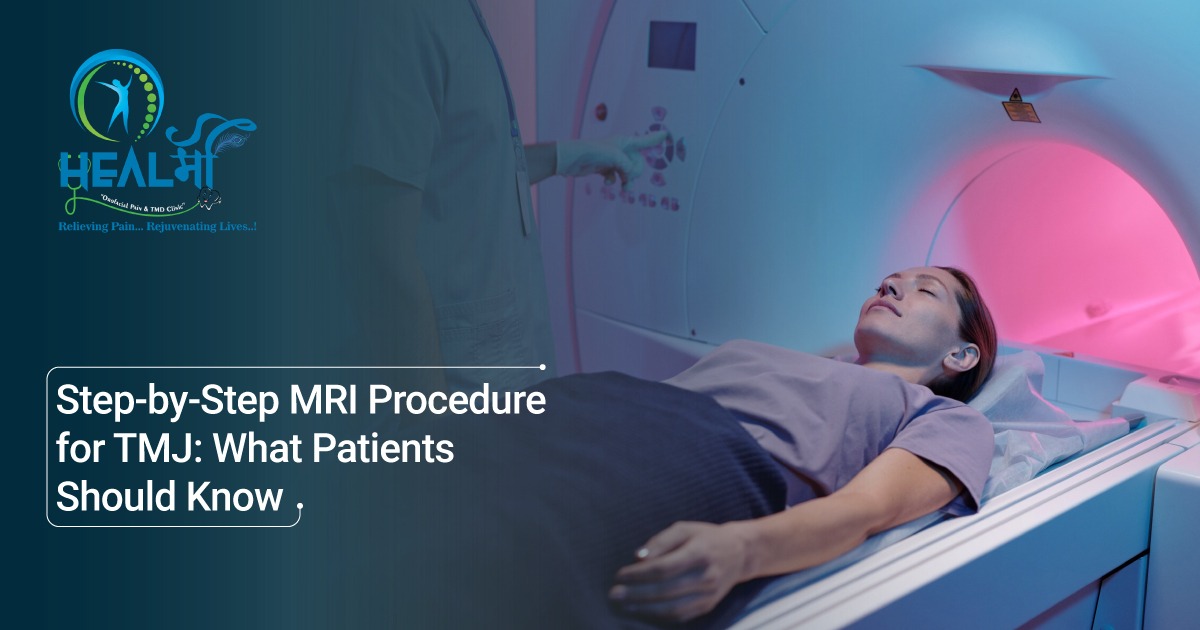
Jaw pain, clicking sounds or limited ability to open the mouth are symptoms of temporomandibular joint TMJ (Temporomandibular Joint) disorders. Most of those who seek TMJ (Temporomandibular Joint) treatment in Ahmedabad are recommended an MRI to get a better understanding of the state of their joint. MRI enables doctors to view the soft tissues of the jaw in great detail, something that is not always achievable with routine X-rays.
This post explains the MRI for TMJ (Temporomandibular Joint) process so that patients understand what to expect and why it’s important for TMJ (Temporomandibular Joint) treatment.
The temporomandibular joint attaches your lower jaw to your skull. It’s what allows you to speak, chew and yawn. When this joint becomes dysfunctional, it can cause pain, aching or stiffness and limit movement.
TMJ (Temporomandibular Joint) disorders can have a variety of causes.
Doctors typically recommend an MRI when symptoms are persistent or ambiguous. What does MRI (Magnetic Resonance Imaging) look at?
It assists in preparing the correct TMJ (Temporomandibular Joint) treatment.
MRI scan of the TMJ (Temporomandibular Joint) is a non-invasive imaging test that uses powerful magnets and radio waves to produce detailed pictures of the jaw joint. An MRI, unlike a CT scan or X-rays, doesn’t involve the use of radiation.
It is particularly helpful to diagnose soft tissue problems, including :
Given that soft tissues are often associated with TMJ (Temporomandibular Joint) disorders, MRI is one of the most informative diagnostic methods.
Little wonder then that many patients feel apprehensive when going for an MRI – and not just because they’ve seen the size of those machines. Here's a very obvious step-by-step answer.
What happens before the scan? The medical team will want to know :
You might get asked to take off items such as :
Generally, fasting is not necessary for a TMJ (Temporomandibular Joint) MRI unless contrast will be administered.
Once you arrive at the imaging centre or another location, a technician will let you lie down on a small table.
For TMJ (Temporomandibular Joint) imaging :
In certain cases, photographs are taken with the mouth closed and open to observe joint movement.
The table then crawls through the MRI scanner, which resembles a giant tube.
During the scan :
The scan is painless. The key here is to hold still so your images aren’t blurry.
For TMJ (Temporomandibular Joint) films, the tech may instruct you to bite your teeth together in various positions.
You may be asked to :
These images enable dentists to see the joint disc and its movement in connection to jaw motions, which is essential for properly planning TMJ (Temporomandibular Joint) therapy.
Sometimes a contrast dye (typically gadolinium) is injected into a vein to highlight inflammation or tissue changes.
It may not be necessary, depending on your needs.
If contrast is used :
Whether you need contrast is determined by your doctor.
A TMJ (Temporomandibular Joint) MRI generally takes 20 to 45 minutes, or more, depending on the number of images required.
After the scan :
A radiologist subsequently interprets these images.
When the MRI report is available, the provider examines :
These data also suggest TMJ (Temporomandibular Joint) treatment may play a role. Based on these findings, the treatment of a TMJ (Temporomandibular Joint) can include one or more of the following :
The aim is to tailor the treatment for an individual patient based on the specific finding seen on their MRI, not purely whether or not they are symptomatic.
An MRI of the TMJ (Temporomandibular Joint) is a highly useful and simple test that can show detailed problems with the jaw joint. Learning what each step entails in advance can reduce anxiety and make patients feel more prepared.
When TMJ (Temporomandibular Joint) symptoms are severe enough to affect a person’s life, imaging is frequently an integral aspect of diagnosis and treatment planning. Visit HealMe Pain Clinic and know your condition.