Jaw Pain While Chewing: Causes and Treatment
Home
Jaw Pain While Chewing: Causes and Treatment

Home
Jaw Pain While Chewing: Causes and Treatment
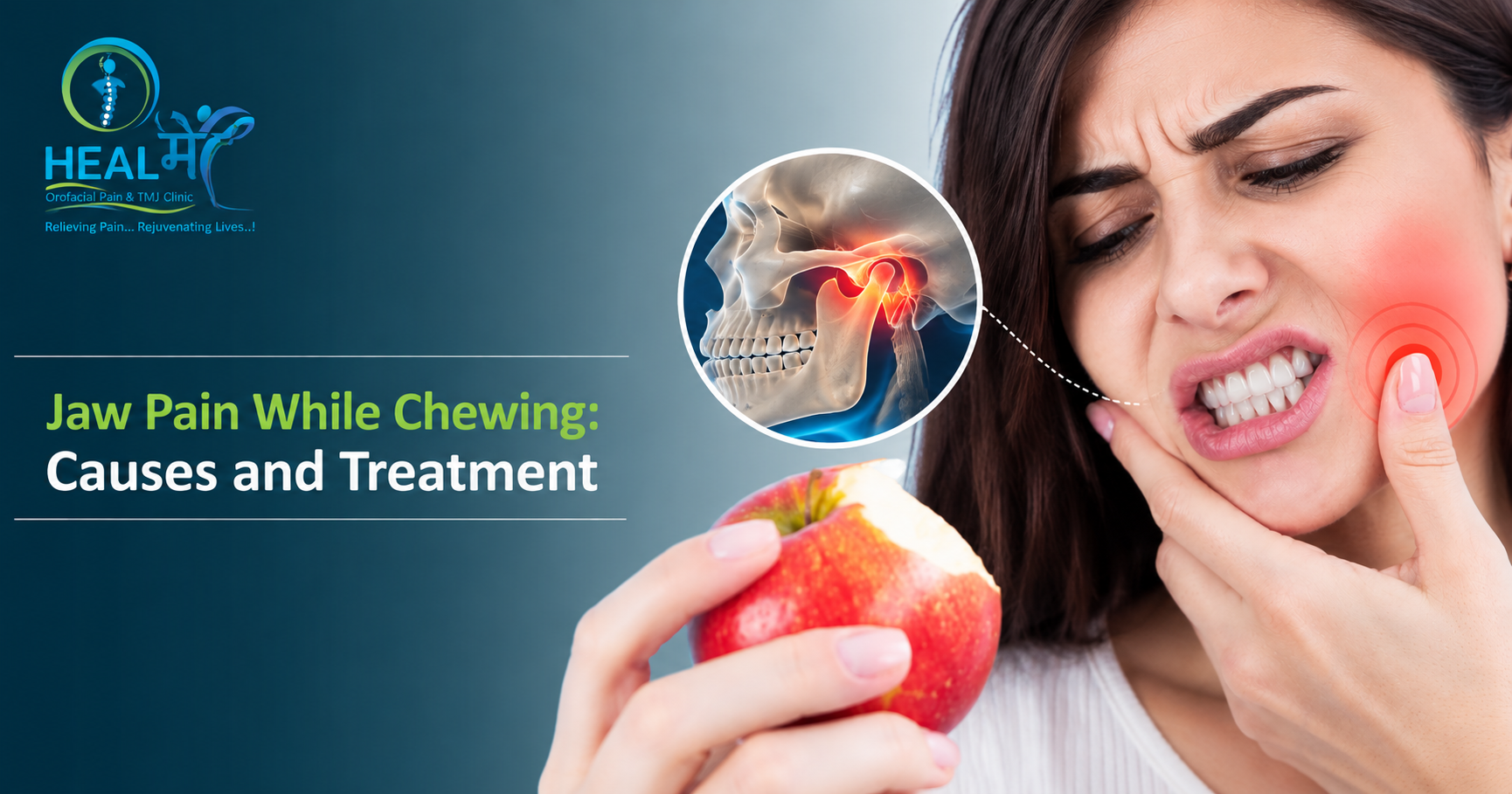
It usually starts small. A tight feeling after a long lunch, a click you hear while biting into an apple, a jaw that feels “off” when you yawn. Then one day a plain roti hurts, and you realise you’ve been chewing on the left side for a month. Jaw pain is easy to put up with right until it isn’t. A temporomandibular joint disorder (TMD) is a common cause, though plenty of other things can cause the same ache. If you’re searching for TMJ treatment in Ahmedabad, the useful first step is understanding what’s actually going on in there.
The jaw is more complex than people assume. There’s a joint, a set of strong muscles, your teeth, and your gums, and any one of them can be the troublemaker.
The joint in question is the temporomandibular joint, or TMJ. It’s the hinge linking your lower jaw to your skull, sitting just in front of each ear. Every time you talk, chew, or yawn, it’s working. When it or the muscles around it get irritated, eating can bring on pain, stiffness, or clicking.
Still, a sore jaw doesn’t always point to the joint. A bad tooth can fool you.
A professional picks the treatment based on the cause, so it’s worth knowing the usual suspects.
This covers problems with the joints and the muscles that move them. Typical complaints are pain near the ears, a jaw that feels stuck or opens only partway, and a click that hurts when you chew.
Many people grind at night and have no idea. Others clench their jaw through a stressful meeting or a long drive. The muscles end up tired and sore. Waking up with a headache, tender temples, or an achy jaw is a classic sign.
Pain from a cavity, an abscess, or an infected gum doesn’t stay put. It travels along the jaw. Sensitivity to hot and cold, swollen gums, or a sharp pain when biting down usually give it away.
A fall, a blow to the face, or a sports knock can damage the joint. Arthritis can also settle in the jaw, bringing stiffness and a reduced range of movement.
Nail biting, constant gum chewing, and a love of very tough food all overwork the jaw muscles. These habits rarely start the trouble alone, but they can keep it going.
What works depends on the cause. Mild soreness often calms down with small changes. Pain that lingers needs a proper look.
Go soft for a while. Khichdi, curd, cooked vegetables, and soft rice give the joint a break. Press a warm or cold pack, wrapped in cloth, on the sore side. Pick whichever feels better, because people really do differ on this. Cut your food small, don’t open it wide for big bites, and drop the chewing gum.
The bigger habit to catch is clenching. Check your jaw right now. Are your teeth touching? They shouldn’t be, unless you’re eating. Lips closed, teeth slightly apart, jaw loose. And if stress is behind the tension, anything that helps you unwind is worth the effort.
Don’t push through painful jaw exercises, and don’t reach for painkillers without making sure they suit you.
If home care hasn’t done enough, get the jaw, teeth, and muscles checked together. After that, the plan depends on what’s found:
Most people start with simple, non-surgical care. Surgery only comes up for selected patients, once other options haven’t helped.
If jaw pain keeps coming back or starts getting in the way of meals, don’t wait it out. See someone if the pain doesn’t go away, your jaw locks, opening your mouth gets difficult, your face swells, or you suspect a tooth infection.
Go to emergency care immediately if jaw pain arrives with chest pressure, breathlessness, sweating, or pain moving into your arm or back. Those can be signs of a heart attack.
Jaw pain has plenty of possible sources, and getting the right diagnosis matters more than just dulling the ache. If yours doesn’t settle, see an appropriate healthcare professional who can say whether it’s a dental issue, a TMJ problem, or something else.
For general guidance, you can reach HealMe Clinic at 8780677703. If your symptoms sound like a TMJ or dental problem, ask who the right specialist would be.
Thinking about TMJ treatment in Ahmedabad? Don’t leave it too long once chewing hurts.
Possible reasons include a TMJ disorder, teeth grinding, muscle strain, decay, a gum infection, or arthritis. An examination is how you find out which one.
Yes, either side, often near the ear. A dental problem can cause one-sided pain too.
Stick to soft foods, take small bites, stop chewing gum, and try a warm or cold compress. If it doesn’t improve or gets worse, get professional advice.
A dentist is a good first stop, since they can check teeth and many joint problems. You might then be referred to an oral and maxillofacial specialist or another professional.
When the pain keeps returning, makes eating hard, limits how wide you can open, or comes with painful clicking or locking. If it appears alongside heart attack symptoms, call for emergency help.